Women Have Sex Out Of Obligation? - Forbes: A new survey on women’s sexual habits and beliefs sparked some interesting theories: Women are not prioritizing sex as part of their health regimen; women are not all that satisfied in the bedroom; and, most notably, that women are having sex because they feel obligated rather than for enjoyment.
It found that while half of women agree engaging in sexual activity a few times a week is “sexually healthy,” the majority of women (66%) have sex once a week or less. Moreover, while three out of five women said that connecting with their partner was the most important aspect of their sex life, only two out five report being “very or extremely satisfied” with that aspect of their sex lives.
Finally, to those healthy 30% who are having sex four times a week and reaping the benefits–decreased stress, strengthened pelvic floor muscles, increased immune system function and calorie burning–bravo. What’s your secret?
Wednesday, November 9, 2011
The Social Graph is Neither (Pinboard Blog)
The Social Graph is Neither (Pinboard Blog): Imagine the U.S. Census as conducted by direct marketers - that's the social graph.
Social networks exist to sell you crap. The icky feeling you get when your friend starts to talk to you about Amway, or when you spot someone passing out business cards at a birthday party, is the entire driving force behind a site like Facebook.
We have a name for the kind of person who collects a detailed, permanent dossier on everyone they interact with, with the intent of using it to manipulate others for personal advantage - we call that person a sociopath. And both Google and Facebook have gone deep into stalker territory with their attempts to track our every action. Even if you have faith in their good intentions, you feel misgivings about stepping into the elaborate shrine they've built to document your entire online life.
Adobe ceases development on Flash Player for mobile, refocuses efforts on HTML5 – MacDailyNews - Welcome Home
Adobe ceases development on Flash Player for mobile, refocuses efforts on HTML5 – MacDailyNews - Welcome Home: Apple has a long relationship with Adobe. In fact, we met Adobe’s founders when they were in their proverbial garage. Apple was their first big customer, adopting their Postscript language for our new Laserwriter printer. Apple invested in Adobe and owned around 20% of the company for many years. The two companies worked closely together to pioneer desktop publishing and there were many good times. Since that golden era, the companies have grown apart. Apple went through its near death experience, and Adobe was drawn to the corporate market with their Acrobat products. Today the two companies still work together to serve their joint creative customers – Mac users buy around half of Adobe’s Creative Suite products – but beyond that there are few joint interests.
Apple even creates open standards for the web. For example, Apple began with a small open source project and created WebKit, a complete open-source HTML5 rendering engine that is the heart of the Safari web browser used in all our products. WebKit has been widely adopted. Google uses it for Android’s browser, Palm uses it, Nokia uses it, and RIM (Blackberry) has announced they will use it too. Almost every smartphone web browser other than Microsoft’s uses WebKit. By making its WebKit technology open, Apple has set the standard for mobile web browsers.
Four short links: 9 November 2011
Four short links: 9 November 2011:
- The Social Graph is Neither -- Maciej Ceglowski nails it. Imagine the U.S. Census as conducted by direct marketers - that's the social graph. Social networks exist to sell you crap. The icky feeling you get when your friend starts to talk to you about Amway, or when you spot someone passing out business cards at a birthday party, is the entire driving force behind a site like Facebook.
- Anonymous 101 (Wired) -- Quinn Norton explains where Anonymous came from, what it is, and why it is.
- Antibiotic Resistance (The Atlantic) -- Laxminarayan likens antibiotics resistance to global warming: every country needs to solve its own problems and cooperate—but if it doesn't, we all suffer. This is why we can't have nice things. (via Courtney Johnston)
- Deep Idle for Android -- developer saw his handset wasn't going into a deep-enough battery-saving idle mode, saw it wasn't implemented in the kernel, implemented it, and reduced battery consumption by 55%. Very cool to see open source working as it's supposed to. (via Leonard Lin)
Tuesday, November 8, 2011
Adobe Discontinues Development of Flash on Mobile Devices
Adobe Discontinues Development of Flash on Mobile Devices: ZDNet is reporting that Adobe has announced to its partners that the company has discontinued development on Flash Player for mobile browsers. The news comes roughly a year and a half after the publication of Steve Jobs' "Thoughts on Flash" open letter, laying out his thoughts on the use of Flash in mobile devices.
Instead of working on mobile Flash, Adobe plans to continue developing its tools to produce applications that work on mobile app stores, including Apple's App Store.
From Adobe's announcement:
Our future work with Flash on mobile devices will be focused on enabling Flash developers to package native apps with Adobe AIR for all the major app stores. We will no longer adapt Flash Player for mobile devices to new browser, OS version or device configurations. Some of our source code licensees may opt to continue working on and releasing their own implementations. We will continue to support the current Android and PlayBook configurations with critical bug fixes and security updates.
Apple brings Criterion Collection to iTunes, minus extras | Electronista
Apple brings Criterion Collection to iTunes, minus extras | Electronista: Apple has scored a minor coup for iTunes by adding some of The Criterion Collection's movies (iTunes Store) to its roster. The group includes 46 classic, usually remastered movies of the hundreds in the group. Among the titles are Akira Kurosawa movies such as The Seven Samurai, Ingmar Bergman's The Seventh Seal, and Louie Malle's My Dinner With Andre.
How to make basic edits in iPhoto | Macworld
How to make basic edits in iPhoto | Macworld: Take your best pictures and make them better with editing. iPhoto includes most of the image-editing tools that casual photographers need to spruce up their photos. If you use iPhoto to manage your photo collection, try these fixes before cracking open a dedicated image editor.
CROWDS R US | More Intelligent Life
CROWDS R US | More Intelligent Life: Crowds, we are often told, are dumb. They obliterate reason, sentience and accountability, turning individuals into helpless copycats. Commentators on the riots offered different explanations but most agreed that crowd psychology was part of the problem. “The dominant trait of the crowd is to reduce its myriad individuals to a single, dysfunctional persona,” wrote the novelist Will Self in the New Statesman. “The crowd is stupider than the averaging of its component minds.” The violence was said to have spread like a “contagion” through the crowd, facilitated by social media. For those who wanted to sound scientific, the term to drop was “deindividuation”: the loss of identity and moral responsibility that can occur in a group. But do crowds really make us more stupid?
Earlier this year, the world watched a crowd bring down an autocratic government, by the simple act of coming together in one place, day after day, night after night. Egyptian protesters created a micro-society in Tahrir Square, organising garbage collection, defending themselves when they needed to, but otherwise ensuring the protest remained peaceful. As well as courage, this took intelligence, discipline and restraint. Few international observers accused the crowd in Tahrir Square of being dysfunctional, or of turning its members into animals.
Le Bon’s book hit a cultural nerve: a phrase of his, the “era of crowds”, stuck to the late 19th century. Europe’s cities had grown and industrialised fast, creating a vast and unruly class of people who had a nasty habit of coming together in public places to demand things. In Paris riots had threatened and sometimes overturned the established order for the last hundred years. Le Bon was a conservative, distrustful of fashionable democratic ideas. Like other members of the French middle class, when he saw a crowd he smelt only trouble. It’s hardly surprising that he would characterise the people in them as sub-human.
What is surprising is that we seem to have inherited his prejudices. John Drury, a psychologist at Sussex university who studies crowd behaviour, believes that the idea that crowds induce irrational behaviour and erase individuality just isn’t supported by the evidence. First, most crowds aren’t violent. The crowd in the shopping mall or at a music festival is usually calm and ordered. Even crowds that include conflicting groups, as at football matches, are more likely to be peaceful than not. Second, even when crowds do turn violent, they aren’t necessarily irrational. In the 18th century England was afflicted by food riots. If ever there was an atavistic reason to riot, that was surely it. But the historian E.P. Thompson showed that the riots took place not when food was at its most scarce but when people saw merchants selling grain at a steep profit; the rioters were motivated by a rational sense of injustice rather than the “animal” drive of hunger.
When an accountant plays air guitar at a concert, he isn’t giving up his identity so much as finding a neglected corner of it. Above all, he is enjoying the glorious sensation of feeling part of something bigger than himself.
An accidental crowd can become an organised one in response to an external threat. Passengers on the Piccadilly line who left King’s Cross at 8.50am on July 7th 2005 would have felt little in common with each other, bar the tetchiness of the commuter. But when the carriage exploded and the survivors realised they had been attacked, they performed heroic acts to save the lives of strangers they had just been ignoring. The Tahrir Square crowd included supporters from Cairo’s leading soccer teams, Al-Ahly and Al-Zamalek. The two groups have a longstanding post-match tradition of vicious fighting. Yet in Tahrir Square they stood together against Mubarak’s thugs. Crowds are as likely to bring out the best in us as the worst.
Organize and play your media from a NAS
Organize and play your media from a NAS: 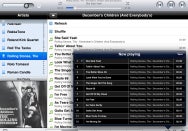 If you have multiple computers, iOS devices, and media players in your home, it's likely your media is a mess--scattered from one end of your home to the other. With the aid of a NAS and these tips, you can cull, organize, and play that content on any device you own.
Monday, November 7, 2011
Intel's newest lands in an old standard: Commodore 64 | Nanotech - The Circuits Blog - CNET News
Intel's newest lands in an old standard: Commodore 64 | Nanotech - The Circuits Blog - CNET News: Well, a lot has changed in 30 years. After resurrecting the Commodore name in April of 2010, the company came out with an Intel Atom-based design in April of this year. That's a relatively pokey processor though. So, now Commodore has bulked up its lineup with Intel's latest 2.2GHz Core-i7-2720QM quad-core processor (which turbos to 3.3GHz).
Go to iforgot.apple.com to reset your Apple ID password.
Go to iforgot.apple.com to reset your Apple ID password.:
If you forget your Apple ID password or simply want to change to a new one, use Safari on your computer or any of your devices to go to iforgot.apple.com where you can enter your Apple ID and begin the process. You'll be asked to choose whether you want to confirm your identity via an email to the account associated with your Apple ID or by answering the security question you put in place when you first created it. As you create your new password, you'll see an indication of its relative strength in the area below the form. You can keep entering and editing until you achieve your ideal password strength. When you're satisfied, confirm your password and tap or click the Reset button.
You can use your Apple ID in iTunes, iChat, iCloud, the Apple Online Store, Apple Retail Stores and at Apple.com Support. If you don't have an Apple ID and want to create one, go to appleid.apple.com.
Sunday, November 6, 2011
What Should We Expect From Genre TV in 2012? « Spinoff Online – TV, Film and Entertainment News Daily
What Should We Expect From Genre TV in 2012? « Spinoff Online – TV, Film and Entertainment News Daily: ABC prepping both 666 Park (about an apartment building wherein all the tenants have made a literal deal with the devil) and Wicked Good (about a coven of witches in Southern California fighting evil. I think this used to be called Charmed, but I don’t think ABC can really be blamed for forgetting about that show)
Yahoo's IntoNow: Interactive TV, but not on TV | Challengers - CNET News
Yahoo's IntoNow: Interactive TV, but not on TV | Challengers - CNET News: IntoNow started out as an iPhone app that Yahoo acquired back in April. It's based on a clever TV-show-fingerprinting technology that's basically Shazam for TV: You let it listen to the program you're watching for a few seconds and it can figure out what the show is.
I tried the iPhone version a few months ago, and it was fun for a while to play random episodes of "I Love Lucy" and have IntoNow identify them for me. By itself, though, the identification is kind of a party trick. Generally speaking, if you're watching a TV program, you either already know what it is or can find out easily enough.
That's what I've found. I already know what I'm watching, so what's the point?
Saturday, November 5, 2011
Arts & Letters Daily (05 Nov 2011)
Arts & Letters Daily (05 Nov 2011): The university is broken. Students learn little and take on big debt to pay for an education that, intellectually, doesn't amount to much... more
Our Universities: Why Are They Failing?
The Collegiate Learning Assessment reveals that some 45 percent of students in the sample had made effectively no progress in critical thinking, complex reasoning, and writing in their first two years.
Second, and more depressing: vast numbers of students come to university with no particular interest in their courses and no sense of how these might prepare them for future careers. The desire they cherish, Arum and Roksa write, is to act out “cultural scripts of college life depicted in popular movies such as Animal House (1978) and National Lampoon’s Van Wilder (2002).” Academic studies don’t loom large on their mental maps of the university. Even at the elite University of California, students report that on average they spend “twelve hours [a week] socializing with friends, eleven hours using computers for fun, six hours watching television, six hours exercising, five hours on hobbies”—and thirteen hours a week studying.
Americans, as Malcolm Harris recently pointed out, now owe almost a trillion dollars in student loans, more than they owe in credit card debt. Student debt, he explained, “is an exceptionally punishing kind to have. Not only is it inescapable through bankruptcy, but student loans have no expiration date and collectors can garnish wages, social security payments, and even unemployment benefits.” The burden is distributed by the reverse of the Matthew principle: to him who hath not, no one gives anything.
All this to pay for an education that—as we have already seen—means little, intellectually, to many of those who are courting debtors’ prison to pay for it. The unkindest cut of all, of course, is that those who drop out must still carry the full burden of the loans that so many of them have taken out—even though they will, in all probability, earn less and fare worse in hard times than graduates. Yet even unemployment among graduates has been rising—as have rates of student loan default.
Imagine what it’s like to be a normal student nowadays. You did well—even very well—in high school. But you arrive at university with little experience in research and writing and little sense of what your classes have to do with your life plans. You start your first year deep in debt, with more in prospect. You work at Target or a fast-food outlet to pay for your living expenses. You live in a vast, shabby dorm or a huge, flimsy off-campus apartment complex, where your single with bath provides both privacy and isolation. And you see professors from a great distance, in space as well as culture: from the back of a vast dark auditorium, full of your peers checking Facebook on their laptops.
It’s no wonder, in these circumstances, that many students never really internalize the new demands and standards of university work. Instead they drift from course to course, looking for entertainment and easy grades. Nor is it surprising that many aren’t ready when trouble comes. Students drink too much alcohol, smoke too much marijuana, play too many computer games, wreck cars, become pregnant, get overwhelmed trying to help anorexic roommates, and too often lose the modest but vital support previously provided by a parent who has been laid off.
Still, the dark hordes of forgotten students who leave the university as Napoleon’s army left Russia, uninspired by their courses, wounded in many cases by what they experience as their own failures, weighed down by their debts, need to be seen and heard.
Friday, November 4, 2011
Steve Jobs interview: One-on-one in 1995
Steve Jobs interview: One-on-one in 1995: I used to think when I was in my twenties that technology was the solution to most of the world's problems, but unfortunately it just ain't so. I'll give you an analogy. Alot of times we think "Why is the television programming so bad? Why are television shows so demeaning, so poor?"
The first thought that occurs to you is "Well, there is a conspiracy: the networks are feeding us this slop because its cheap to produce. It's the networks that are controlling this and they are feeding us this stuff."
But the truth of the matter, if you study it in any depth, is that networks absolutely want to give people what they want so that will watch the shows. If people wanted something different, they would get it. And the truth of the matter is that the shows that are on television, are on television because that's what people want. The majority of people in this country want to turn on a television and turn off their brain and that's what they get. And that's far more depressing than a conspiracy.
Thursday, November 3, 2011
Does Inequality Make Us Unhappy?
Does Inequality Make Us Unhappy?: When the rich do something to deserve their riches, nobody complains. But when those at the bottom don't understand the unequal distribution of wealth, they get furious. Neuroscience blogger Jonah Lehrer examines the psychological roots of the occupy movement.
Wednesday, November 2, 2011
Yahoo Doesn’t Understand What Makes Flipboard Special | Epicenter | Wired.com
Yahoo Doesn’t Understand What Makes Flipboard Special | Epicenter | Wired.com: Flipboard solves an actual problem for readers: trying to distill newsworthy reading items from already existing RSS and social media feeds. Yahoo’s Livestand only solves problems for publishers and advertisers: how to display content and advertising to readers without having to have everyone write their own code from scratch.
Google pulls Gmail iOS app for fix, accused of low interest
Google pulls Gmail iOS app for fix, accused of low interest: Google in just two hours has already pulled its Gmail app for iOS. The company's Dave Girouard explained the removal as a voluntary step after Google found a bug that would break notifications and trigger errors the first time the app is open. The fix is underway, and a new version was coming "soon," he said....
Good thing I haven't opened it yet.
'Steve Jobs' Easily Tops Best Seller Lists in Debut Week
'Steve Jobs' Easily Tops Best Seller Lists in Debut Week: Despite being on sale for just six days in the US, Steve Jobs: The Exclusive Biography is already the 18th bestselling book of the year.
‘Steve Jobs – One Last Thing’ premieres today on PBS
‘Steve Jobs – One Last Thing’ premieres today on PBS: Few men have changed our everyday world of work, leisure and human communication in the way that Steve Jobs has...
Subscribe to:
Posts (Atom)